Consultations 301-262-5500

Spring 2026 Winner of the Young Legal Professionals Scholarship
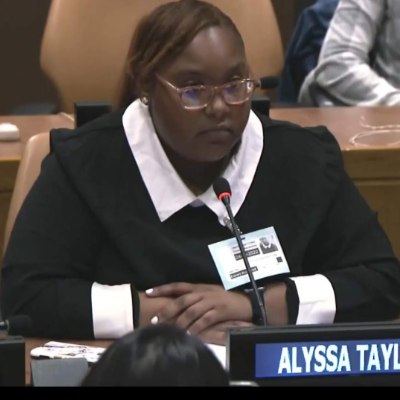
Alyssa Taylor
Alyssa, who is pursuing a legal education at Regent University, has received $1,000 through the Young Legal Professionals Scholarship. Through her past work experience, Alyssa has learned the importance of confidentiality, diligence, and transparency. Both Alyssa’s educational journey as well as personal experiences have made her into a passionate advocate, exemplifying patience, empathy, and justice.
Read Their Essay Here:
Introduction
The responsibility lawyers owe to their clients isn’t confined to professional rules or ethical codes. It’s rooted in trust, vulnerability, and the reality that people encounter the law at moments when their lives feel uncertain. Legal systems appear in times of financial distress, institutional, conflict, illness or displacement–moments when people are least prepared to advocate for themselves. Through my professional work in higher education, my academic focus on law and human rights, and my lived experience as a caregiver, I’ve come to understand that a lawyer’s responsibility is both technical and emotional. Lawyers are entrusted with cases, people’s privacy, dignity, and futures.
Professional Responsibility
My understanding of professional responsibility took shape through my role as a graduate assistant working closely with administrators and students navigating difficult institutional systems. Much of my work involved sensitive information related to financial aid, access to resources, and personal hardship. Students often shared deeply personal information–family finances, housing insecurity or medical challenges–not because they wanted to but because it was needed to receive help. Guarding that information was an obligation grounded in trust. This experience taught me how important confidentiality is to any advocacy based job. When people share personal details, they do so with the expectation that their vulnerability won’t be exploited or exposed. A breach of confidentiality can discourage someone from seeking help again.
Lawyers carry this same responsibility. Protecting client information isn’t compliance with a rule; it’s an active commitment to protecting people who are already navigating inequitable systems with limited power. My professional role also focused on diligence and communication. Institutional processes can be slow and intimidating. Acting responsibly meant following up when answers were delayed, explaining procedures and ensuring students understood their options. These experiences reinforced my belief that lawyers owe their clients more than legal knowledge. They owe clarity, responsiveness and reassurance that they matter and won’t be ignored.
Academic Foundations and Advocacy
I further developed my understanding of responsibility through my service in academic judicial proceedings. In that setting fairness, due process, and proportionality were principles that directly affected students' academic standing and future. I saw first hand how easily authority can feel overwhelming when the outcome is uncertain. Using ethical judgment required balancing empathy with objectivity and remaining committed to integrity when decisions were difficult. This experience helped me understand that a lawyer’s responsibility isn’t to promise outcomes, but to give honest guidance allowing clients to make informed decisions.
My academic focus on international human rights and refugee law deepened this perspective. Studying mass atrocities, forced displacement, and systemic exploitation made it clear that access to legal representation determines whether people are recognized as having rights or not. These studies also showed me that legal responsibility extends beyond documents and doctrine. Lawyers must understand how law operates within broader social, political and economic contexts and how structural inequities affect access to justice. Responsibility in legal practice therefore includes cultural awareness, historical understanding and commitment to ensuring that the law protects not excludes.
The height of my academic journey built up to the opportunity to speak at the United Nations Headquarters on the value of education as an inalienable human right. Standing in that space reinforced my passion for advocacy. Education, like legal protection, is foundational to dignity, self determination and opportunity. When either is denied, people lose resources and agency. Lawyers, by way of their training and credibility, inherit a responsibility to advocate beyond individual cases–to speak clearly and courageously where law intersects with policy, human rights, and global justice.
Responsibility Through Caregiving
While my professional and academic experiences shaped my understanding of responsibility, caregiving gave it meaning. As a caretaker for my mother, I spent years navigating medical systems, insurance policies, and administrative barriers that felt unforgiving. Appointments, appeals and insurance coverage disputes became part of everyday life. In those moments advocacy became a necessity. I learned how quickly people can be overwhelmed by systems that aren’t designed with vulnerability in mind.
Caregiving requires attentiveness and persistence. I found myself questioning decisions, asking for clarification and ensuring my mother’s needs weren't dismissed as inconveniences. Over time, I realized how important it is for someone to remain engaged when others are afraid or exhausted. These experiences mirror the role lawyers play for their clients. People seek legal representation at moments of stress or uncertainty, leaning on attorneys to shoulder burdens they can’t manage alone. A responsible lawyer recognizes this and responds with patience, empathy and consistency. Most importantly, caregiving taught me that advocacy is a sustained effort. Responsibility is demonstrated through follow up, attentiveness and staying engaged even when progress is slow. In legal practice, like in caregiving, delays and oversights carry consequences. Lawyers who take this responsibility seriously honor both their clients’ dignity and the role of the law.
Stewardship of Law
Lastly, lawyers have a responsibility to uphold the integrity of the law. Every client interaction reflects the entire system. Practicing with professionalism, empathy and ethics reinforces people's confidence in the law. This responsibility has become especially meaningful to me as I pursue my Master of Law in Human Rights and Global Justice, where I’m continually challenged to examine how legal systems can either perpetuate injustice or serve as a mechanism for accountability and reform. My studies emphasize that the legitimacy of the law depends on those entrusted to interpret and apply it. Lawyers are stewards of a profession that carries power, and with that power comes a duty to act thoughtfully and ethically. As someone committed to a legal career grounded in service, this responsibility is a privilege and a calling. The law restores balance, affirms rights, and gives structure to justice. Lawyers are its guardians.
In sum, lawyers owe their clients competence, confidentiality, honest counsel, and respect for their humanity. My professional roles, academics, and personal experiences have shown me that responsibility in law isn’t passive. It’s an active, sustained commitment to advocacy, integrity and justice–one that I’m prepared to carry forward in my legal career.

Office
14300 Gallant Fox Ln, Ste 103
Bowie, MD 20715
Schedule a Consultation
301-262-5500
Fee: $150 for 30 Minute Consultation


Contact Our Team
 The use of the Internet or this form for communication with the firm or any individual member of the firm does not establish an attorney-client relationship. Confidential or time-sensitive information should not be sent through this form.
I have read and understand the Disclaimer and Privacy Policy.